

Windows 10 Pro: Download, Install & Activate – Full Guide 2026

Ready to set up Windows 10 Pro? Whether you’re doing a brand-new clean installation, upgrading from Windows 10 Home, or re-activating on an existing PC, this step-by-step guide covers everything you need. Once you’ve purchased your Windows 10 Pro key from WinCDKey, follow the method that applies to your situation below.
Need your license key first? Browse our Windows 10 product range — instant digital delivery after payment.
Before You Start: System Requirements
Make sure your PC meets the minimum requirements for Windows 10 Pro:
| Requirement | Minimum |
|---|---|
| Processor | 1 GHz or faster (32-bit or 64-bit) |
| RAM | 1 GB (32-bit) / 2 GB (64-bit) |
| Storage | 16 GB (32-bit) / 32 GB (64-bit) free space |
| Graphics | DirectX 9 or later with WDDM 1.0 driver |
| Display | 800 × 600 resolution |
Option 1: Clean Installation (Recommended for New PCs or Reinstalls)
Use this method if:
- You’re installing on a brand-new PC with no operating system
- You’re replacing an older Windows version (Vista, 7, 8.1)
- You want a completely fresh start
Step 1 – Download the Windows 10 Media Creation Tool
Go directly to Microsoft’s official download page: 👉 https://www.microsoft.com/en-us/software-download/windows10
Click Download tool now and save the file.
Step 2 – Create Installation Media (USB or DVD)
- Run the MediaCreationTool.exe you just downloaded.
- Accept the license terms.
- Select “Create installation media (USB flash drive, DVD, or ISO file) for another PC”.
- Choose your language, edition (Windows 10), and architecture (64-bit recommended).
- Select USB flash drive (minimum 8 GB) or ISO file if you prefer to burn a DVD.
- Let the tool download and write the installation files — this may take 15–30 minutes.
Step 3 – Boot from the USB/DVD
- Insert your USB drive or DVD into the target PC.
- Restart and enter the BIOS/UEFI (usually by pressing F2, F12, Del, or Esc during startup — varies by manufacturer).
- Set USB or DVD as the first boot device.
- Save and exit BIOS — your PC will boot from the installation media.
Step 4 – Install Windows 10 Pro
- Select your language, time, and keyboard format, then click Next.
- Click Install now.
- When prompted, enter the Windows 10 Pro product key provided by WinCDKey. (If you want to skip this step and enter it after, click “I don’t have a product key” — you can activate later.)
- Select Windows 10 Pro from the edition list.
- Accept the license agreement.
- Choose “Custom: Install Windows only (advanced)” for a clean install.
- Delete all existing partitions on the target drive and create a new one (this wipes the drive — back up data first).
- Click Next and let the installation complete. Your PC will restart several times automatically.
Step 5 – Activate Windows 10 Pro
After installation, Windows may activate automatically if connected to the internet. If not:
- Go to Settings → Update & Security → Activation.
- Click Change product key.
- Enter your WinCDKey product key and click Next.
- Windows will verify and activate online.
✅ Once activated, “Windows is activated” will appear in the Activation settings.
Option 2: Upgrade Windows 10 Home to Pro (GUI Method)
Use this method if:
- You’re currently running Windows 10 Home
- You want to upgrade to Pro without reinstalling
Steps:
- Press Windows key + R, type
slui.exe 3, and press Enter. - Enter your Windows 10 Pro product key from WinCDKey.
- If the key isn’t accepted immediately, try the generic upgrade key first:
VK7JG-NPHTM-C97JM-9MPGT-3V66T - Then go to Settings → System → About → Change product key.
- Enter your actual WinCDKey product key here to complete the upgrade and activate.
- Your PC will begin the upgrade process — save all open work, as it will restart.
The upgrade typically takes 5–15 minutes depending on your system. All your files and apps are preserved.
Tip: If you encounter error 0x800f0805, ensure:
- You have at least 20 GB of free disk space
- Windows Update is fully up to date
- If the issue persists, proceed with a clean installation (Option 1)
Option 3: Upgrade Windows 10 Home to Pro via Command Prompt (CMD)
Use this method if:
- The GUI method didn’t work
- You prefer a command-line approach
Step 1 – Open CMD as Administrator
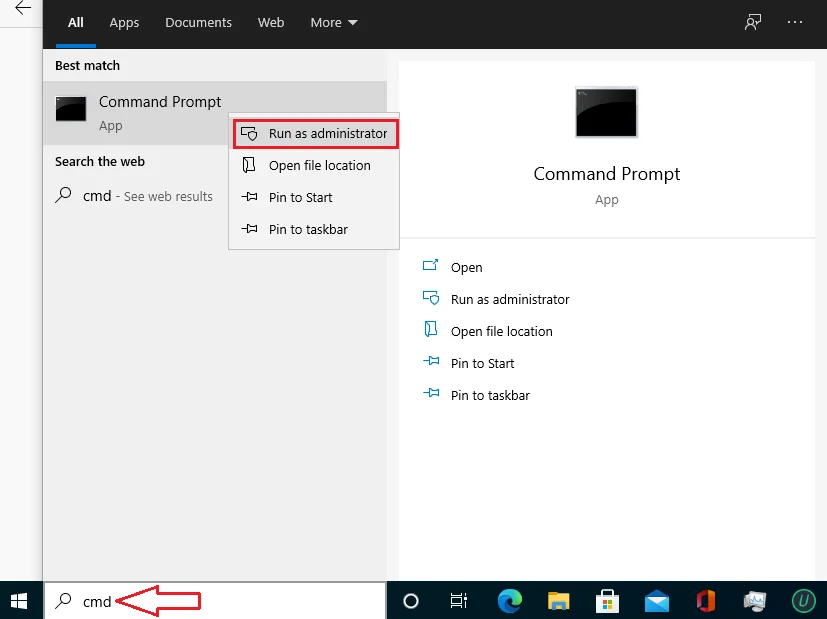
Press Windows key, search for Command Prompt, right-click → Run as administrator.
Step 2 – Clear any existing license
Paste these commands one at a time and press Enter after each:
slmgr.vbs /upk
slmgr.vbs /ckms
Step 3 – Verify your edition supports the upgrade
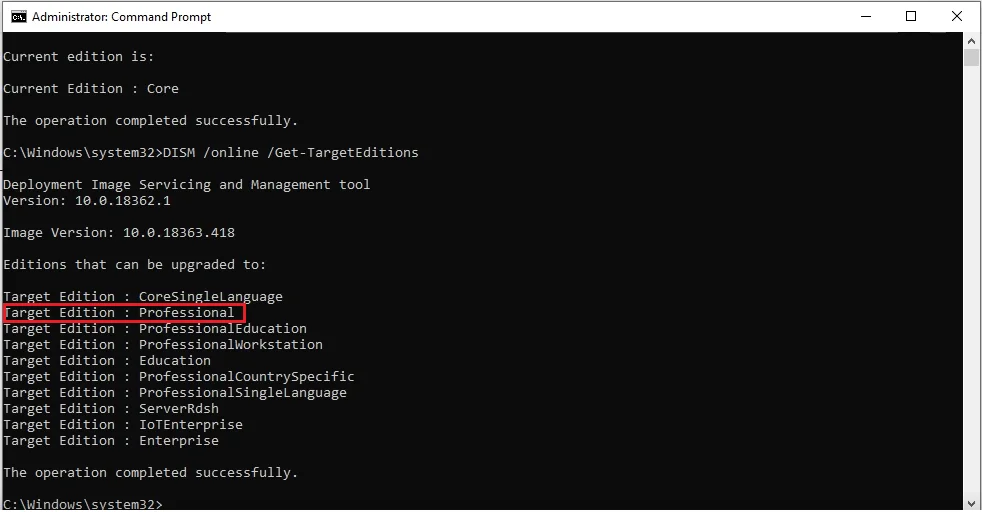
DISM /online /Get-TargetEditionsIf you see Target Edition: Professional in the output, your system is eligible.
Step 4 – Apply the generic upgrade key and switch edition
sc config LicenseManager start= auto & net start LicenseManager
sc config wuauserv start= auto & net start wuauserv
changepk.exe /productkey VK7JG-NPHTM-C97JM-9MPGT-3V66T
exit
Wait for the process to complete — your PC may restart to finish upgrading.
Step 5 – Activate with your WinCDKey product key
After the upgrade, activate using your real license key:
slmgr.vbs /ipk XXXXX-XXXXX-XXXXX-XXXXX-XXXXX
slmgr.vbs /ato
Replace the X’s with your actual product key from WinCDKey.
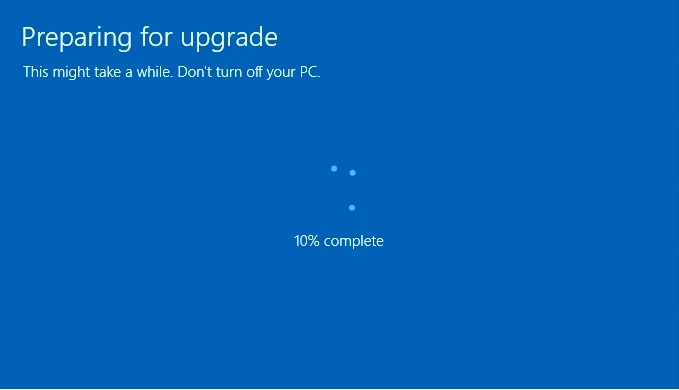
Note: If you see error 0x80070005, simply restart your PC and activation will complete automatically.
Activation Troubleshooting
| Error Code | Meaning | Fix |
|---|---|---|
| 0xC004F074 | Can’t reach Microsoft’s activation servers | Check internet connection; try phone activation |
| 0x800f0805 | Upgrade blocked | Free up disk space + run Windows Update |
| 0x80070005 | Access denied | Restart PC; try again after reboot |
| 0xC004C003 | Key not accepted | Contact WinCDKey support |
Phone Activation Option: If online activation fails, you can use the Microsoft phone activation method. WinCDKey also offers a Phone Activation (CID) Tool to assist with this process quickly.
Frequently Asked Questions
Can I use my Windows 10 Pro key on multiple PCs? Standard retail keys from WinCDKey are licensed for one PC. For multi-device needs, check our Windows 10 Pro 5-device options.
Will my files be deleted during upgrade from Home to Pro? No — the upgrade method (Options 2 and 3) preserves all your files and applications.
Can I upgrade from Windows 10 Pro to Windows 11 Pro later? Yes, Windows 11 Pro is a free upgrade for eligible Windows 10 Pro devices. Alternatively, you can get a Windows 11 Pro key directly.
Is Windows 10 Pro still supported? Windows 10 reaches end of mainstream support on October 14, 2025. After that, Microsoft will no longer release feature updates. If you want the latest features and long-term security updates, consider upgrading to Windows 11 Pro.
Need a Windows 10 Pro License Key?
WinCDKey offers genuine, instant-delivery Windows 10 Pro keys at competitive prices. As a verified Microsoft partner, all keys are fully licensed and globally compatible.
- 🔑 Windows 10 Pro Key
- 🔑 Windows 10 Pro OEM
- 🔑 Windows 10 Pro (Digital License)
- 🔑 Upgrade Windows 10 Home to Pro
Or, if you’re ready for the next generation, browse our full range of Windows 11 licenses.


